
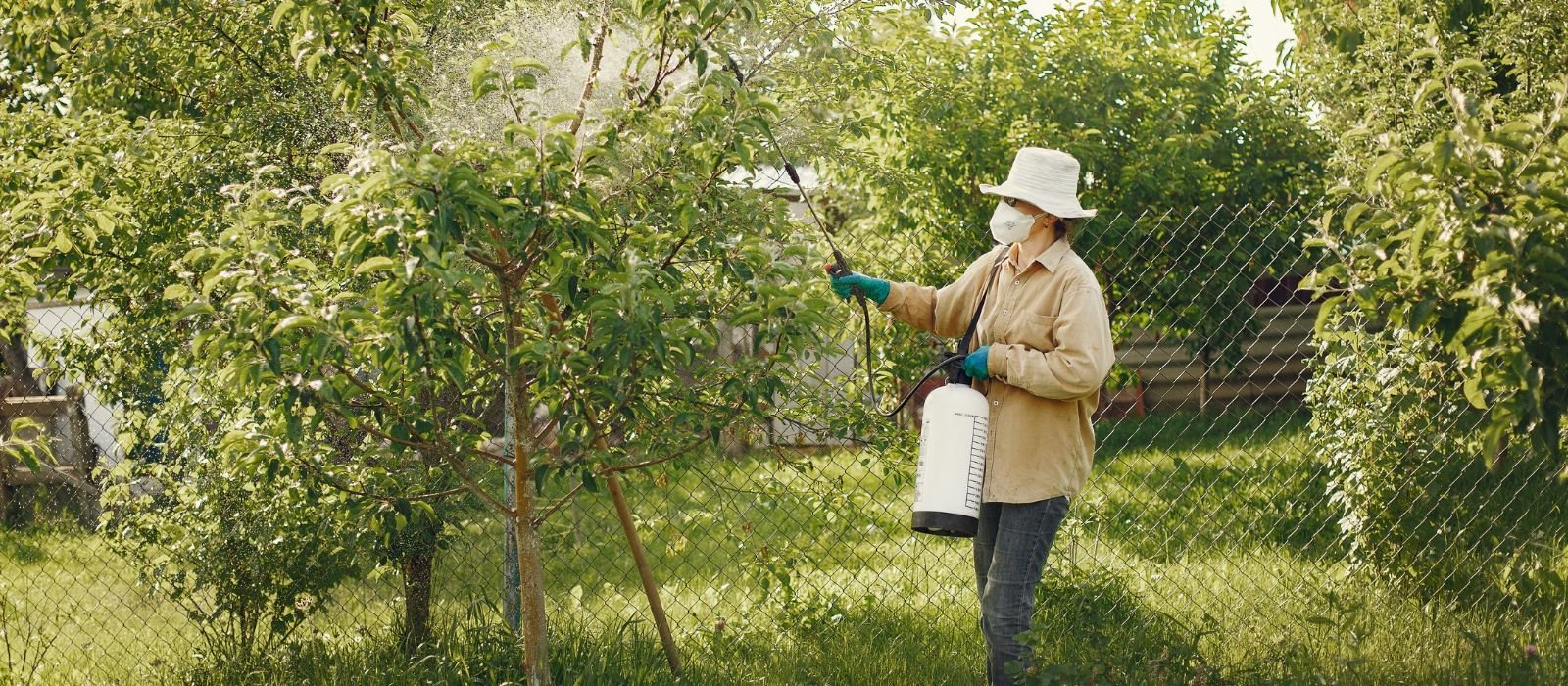
Plant Health Care in Colorado
Keep your trees healthy with science-based care.
Creative Tree & Stump LLC is a Brighton, CO-based tree removal company serving 22 communities across Adams, Weld, Jefferson, Boulder, Broomfield, and Denver counties. Shawn Brandau, an ISA Certified Arborist who has cared for Front Range trees since 1991, builds care around the tree in front of him rather than a one-size spray schedule, and the company is fully insured. Start with a free on-site assessment in Brighton or anywhere across the metro, and we will tell you what your trees need before you spend a dollar on treatment.
Healthy trees are not an accident here. Our soils are heavy, alkaline clay, low in organic matter, and often compacted by lawns and construction — conditions that quietly stress trees for years before the symptoms show. Good plant health care works with those conditions, feeding roots, correcting nutrient lock-out, and catching pests early, so your trees stay strong rather than slowly failing. A healthy tree also shrugs off the pests and storms that take down a stressed one, which makes PHC some of the cheapest insurance you can buy for a mature tree.
Our Plant Health Care Services
Six core treatments that keep Front Range trees healthy — used individually or as a tailored program.
Deep Root Fertilization
Pressure-injected nutrients delivered straight to the root zone in tough soils.
Deep root fertilization →Integrated Pest Management
Monitor first, treat only when needed — targeted, least-toxic pest control.
Integrated pest management →Systemic Trunk Injection
Precise, low-drift treatment delivered inside the tree for EAB and borers.
Systemic trunk injection →Iron Chlorosis Treatment
Restore green to yellowing leaves caused by high-pH soils.
Iron chlorosis treatment →Dormant Oil Application
Knock back overwintering scale, mites and aphid eggs before spring.
Dormant oil application →Soil Aeration & Mulching
Relieve compacted clay and protect the root zone to the drip line.
Soil aeration & mulching →Why Front Range Soils Are Hard on Trees
Most of the tree trouble we treat traces back to the ground itself. Front Range soils are typically heavy clay with a high pH — strongly alkaline — and low in the organic matter that trees evolved to grow in. That alkalinity is why iron and other nutrients are present in the soil but chemically locked away where roots cannot use them, producing the yellowing leaves seen all over the metro.
On top of the chemistry, the soil is usually compacted. Construction during development, foot and mower traffic, and years of irrigated lawn pack the clay tight, squeezing out the air and water pockets roots need to breathe. Many trees are also planted in a small ring cut into thirsty turf that out-competes them for moisture and nutrients. None of this is the homeowner’s fault — it is simply the hand the Front Range deals — but it is exactly why proactive plant health care pays off here in a way it might not in richer soils. Working with these conditions — feeding the root zone, opening up the soil, and correcting the pH-driven nutrient lock-out — is the whole job.
What a Plant Health Care Program Looks Like
Good PHC starts with a diagnosis, not a product. We assess your trees and soil, identify what is actually limiting their health — nutrition, pH, compaction, a pest, or stress — and only then recommend treatments. From there, the work is timed to the seasons: dormant oil in late winter, fertilization in spring or fall, soil and chlorosis correction as needed, and pest monitoring through the growing season. Each treatment lands when it will actually do the most good, which is half of why it works.
For a single struggling tree that might be one or two targeted treatments; for a property full of mature trees it can be a simple yearly plan that keeps everything healthy and catches problems early. Either way it is a relationship, not a one-off sale — we track how your trees respond and adjust the plan over time, rather than repeating the same treatment regardless of results. A tree that has recovered may need less; one under new stress may need a bit more attention that season.
Our Integrated Pest Management Approach
We do not spray on a calendar. Our approach follows integrated pest management (IPM): we monitor and correctly identify what is affecting a tree, judge whether it has crossed a threshold that actually warrants action, and then choose the most targeted, least-disruptive treatment that will work. Many problems turn out to be manageable with soil and cultural fixes rather than chemicals at all — better mulching, relieving compaction, or correcting the soil often does more than any spray.
That philosophy protects your trees, your budget and the surrounding environment — pollinators, pets and people included. When a treatment is genuinely needed, we use the right product, at the right time, applied precisely; when it is not, we say so. It is the difference between a thoughtful program and a blanket spray contract that treats every yard the same. You end up paying for results, not for chemicals you did not actually need.
Common Front Range Tree Issues
A handful of problems account for most of the struggling trees we see. Iron chlorosis — yellowing leaves with green veins — is everywhere, because our high-pH soils lock up iron the tree cannot reach. Compacted clay starves roots of oxygen and water, and the region’s naturally lean soils leave many trees short on nutrients, especially where a thirsty lawn is competing for the same ground. Trees planted in a small cut-out ring surrounded by turf are the most likely to be quietly starving, and a wider mulched bed is often the single best thing you can do for them.
Pests and disease pile on. The big one is emerald ash borer, which is killing untreated ash across the metro — if you have an ash, our emerald ash borer treatment page covers protecting it. Borers, scale, aphids and spider mites also flare up, particularly on trees already stressed by drought, late frosts or poor soil. Stress is the common thread: a weakened tree is the one that gets attacked, which is why keeping a tree vigorous is the single best pest defense there is.
Sometimes care comes too late. When a tree is already more than half dead, hazardous, or beyond recovery, the honest answer is a dead or diseased tree removal rather than money spent on treatment. Across Thornton and the north metro, we help homeowners tell the difference between a tree worth saving and one worth replacing, and we never push treatment on a tree that will not recover. Catching decline early, before it passes that point, is the entire value of a regular look at your trees.
Care Built on Experience, Not a Spray Schedule
Owner-operated since 1991. We diagnose before we treat, and we only treat when it helps.
ISA Certified & Insured
An ISA Certified Arborist diagnoses your trees and designs the care — fully insured.
Diagnose, Then Treat
We identify the real problem first, so you pay for treatment that actually works.
Local Soil Knowledge
Decades of working Front Range clay, alkaline soils and the trees that struggle in them.
Plant Health Care Across 22 Front Range Communities
Based in Brighton, we care for trees and shrubs throughout the 22 communities we serve across Adams, Weld, Jefferson, Boulder, Broomfield and Denver counties.
From the cottonwood-lined river bottoms around Henderson to the established suburbs of the north metro, the same owner-led, soil-savvy approach keeps trees healthy wherever they grow, on city lots and rural acreage alike.
- Brighton
- Henderson
- Commerce City
- Thornton
- Northglenn
- Westminster
- Arvada
- Broomfield
- Erie
- Longmont
- Boulder
- Lafayette
- Louisville
- Dacono
- Fort Lupton
- Frederick
- Eastlake
- Dupont
- Berkley
- Lochbuie
- Keenesburg
- Denver
What Front Range Homeowners Say
Creative Tree & Stump is rated highly across Brighton and the Denver metro, including from homeowners whose struggling trees were correctly diagnosed and brought back to health. Every review is read and answered personally, and the most recent ratings tell you the most about the service you can expect today. Read verified Google reviews on our customer reviews page.
Plant Health Care FAQs
Plant health care is a proactive program of fertilization, pest and disease management, soil care and targeted treatment that keeps trees healthy and resilient. Instead of only reacting to problems, it addresses the soil, nutrition and stress factors that cause them — tailored to each tree. The goal is a tree that stays healthy on its own, not one kept on life support, so the program lightens up as a tree recovers.
Our soils are heavy, alkaline clay that is low in organic matter and nutrients, and lawns compete with trees for what little there is. Deep root fertilization delivers nutrients directly to the root zone to make up the difference, which most native-soil trees here genuinely need. It is injected below the turf so the tree gets it, not the lawn, and the right blend is matched to our alkaline soils.
IPM means monitoring and identifying a problem, deciding whether it has reached a level that warrants action, and then using the most targeted, least-toxic treatment that works. It avoids unnecessary spraying and protects pollinators, pets and people while still controlling real threats. The result is healthier trees and far less chemical use than a routine spray program.
That pattern — yellow leaf tissue with green veins — is iron chlorosis, very common on the Front Range. Our high-pH soils contain iron but lock it in a form the tree cannot absorb. We correct it with chelated iron and longer-term soil management.
During the dormant season — late winter to early spring, before bud break and on days above freezing. Dormant oil smothers overwintering scale, mite eggs and aphid eggs, knocking back pest populations before the growing season starts. Timing matters — applied too late, after the buds open, it can damage tender new growth.
Yes. Lawn fertilizer feeds turf at the surface and rarely reaches tree roots, which are deeper and spread well past the canopy. Deep root fertilization injects a tree-appropriate blend into the root zone itself, so the tree — not just the grass — is fed, and the pressure helps loosen compacted soil at the same time.
Often, if the decline is caught early and the cause is treatable — poor nutrition, chlorosis, a manageable pest or compacted soil. A tree that is more than half dead or structurally failing usually cannot be saved, and we will tell you honestly when removal is the better call rather than charging for treatments that will not work.
Most trees benefit from an annual assessment, with specific treatments timed to the season — dormant oil in late winter, fertilization in spring or fall, pest monitoring through the growing season. We build a simple schedule around what your particular trees need, so you are not guessing about what to do or when.
