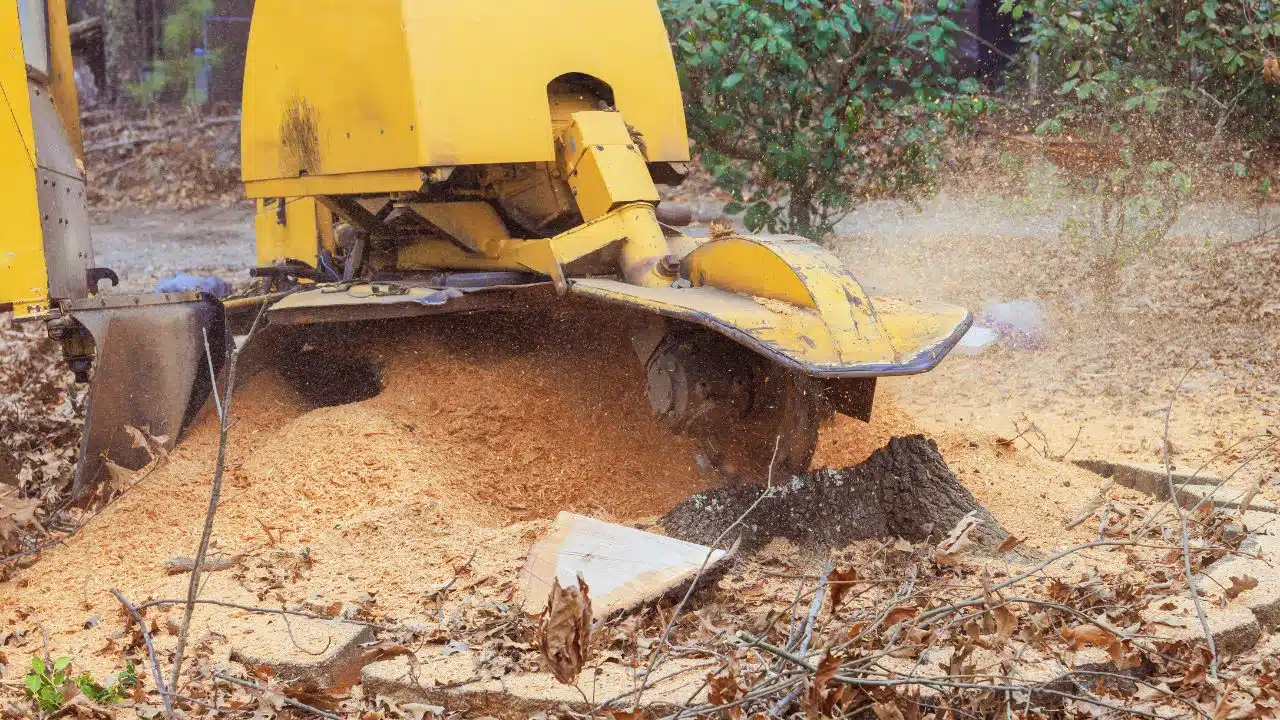
Grind stumps below grade and reclaim your yard.
Creative Tree & Stump LLC is a Brighton, CO-based tree removal company serving 22 communities across Adams, Weld, Jefferson, Boulder, Broomfield, and Denver counties. Stump work is in our name for a reason — Shawn Brandau, an ISA Certified Arborist, has ground and removed stumps across Brighton and greater Adams County since 1991, and the company is fully insured.
A stump is what is left after a tree removal, and grinding it is the step that actually gives you your yard back. Left in place, a stump is a trip hazard, a mower-killer, a home for pests, and on many Front Range species a source of stubborn re-sprouts. Grinding turns that eyesore into open, usable ground, often the same day the rest of the tree work is done.
Three ways to deal with what a tree leaves behind — matched to whether you want to replant, build, or just be rid of it.
Fast below-grade grinding with full chip cleanup — the everyday solution.
Stump grinding →Complete extraction of stump and major roots when you need a clean site.
Full stump removal →Tame disruptive surface roots that buckle lawns and walkways.
Surface root removal →A leftover stump causes more problems than it looks like it should. It is a genuine trip hazard in a lawn, it hides just high enough to wreck a mower blade, and its slow decay invites carpenter ants, termites and wood-boring beetles that can later move toward your home. Decaying stumps also sprout mushrooms and fungi, and many Front Range species — cottonwood, elm, locust, aspen — will throw up a thicket of suckers from a stump and its roots if it is left to grind down naturally.
Removing the stump ends all of that at once: no hazard, no pests, no suckers, and a clean piece of ground you can plant, sod or pave. It is also the finishing touch that makes a removal look complete rather than half-done. After a dead or diseased tree removal especially, grinding the stump removes the last of the decayed wood that drew pests in the first place.
For the large majority of homeowners, grinding is the right call. If your goal is a level lawn, a new flower bed, sod, or simply to be rid of an eyesore, grinding the stump 4–8 inches below grade solves the problem quickly, affordably and without tearing up the yard. The roots left behind decay harmlessly underground over the following years.
Full extraction earns its higher cost in a few specific situations: when you intend to plant a new tree in the exact same hole, when a foundation, addition, pool or patio is going over the spot, or when an aggressively suckering species would otherwise keep sprouting from the roots. The trade-off is a much larger hole, more soil disturbance, and a higher price. We will look at what you are planning for the space and tell you honestly which approach actually fits — there is no upside to selling you a full removal you do not need.
Grinding produces a pile of wood chips mixed with soil, and that material is genuinely useful. The grindings make a perfectly good mulch for established beds, borders and informal paths, where they suppress weeds and hold moisture as they break down. Many homeowners have us spread them on site rather than haul them off.
The one caution is fresh wood over new plantings: as the chips decompose they temporarily draw nitrogen out of the soil, which can starve young grass or new plants. So we keep grindings off areas you are about to seed or plant, and for those spots we haul the material away and finish with clean topsoil instead. You decide which finish you want, and it is priced accordingly — there is no premium for simply leaving the chips on site as mulch.
We start by checking the area for sprinkler lines, utilities, irrigation and anything else hidden near the stump, then clear away rocks and debris that could damage the cutting wheel. The grinder’s carbide teeth chip the stump and surface roots down in passes, working below grade until the stump sits 4–8 inches under the surface — deeper if you plan to replant or re-sod over it.
Cleanup is part of the job. The grinding produces a pile of wood chips and soil; we can backfill the hole with those grindings and leave the surplus mounded for settling, or haul the excess away and top the spot with soil so it is ready for grass. We rake the area clean before we leave, and we will talk through which finish you want — grindings left to mulch, or hauled off for a planting-ready hole — when we quote the job. Because the grinder is self-contained and rubber-tracked, it reaches most backyards through a standard gate without tearing up the lawn on the way in.
Stump grinding is most often priced by the diameter inch — measured across the stump at ground level — with a job minimum, so a single small stump is inexpensive while a wide cottonwood costs more. Beyond size, the price reflects access (can the grinder reach it, or does it go through a gate by hand), how many stumps there are, the spread of surface roots, and whether you want the grindings hauled away.
Grinding is almost always cheaper than full extraction, because it does not require digging out the entire root ball or repairing a large hole. You can get a quick ballpark with our free cost-estimate tool, then confirm it with a free, no-obligation on-site visit — multiple stumps are usually discounted when done in one trip. There are no hidden charges — the estimate covers the grinding, the agreed cleanup, and the haul-off if you want it.
If you want to plant a new tree where the old one stood, plan ahead. Fresh wood chips tie up nitrogen as they break down, which starves new plantings, and the old root mass can get in the way of a new root system. For replanting we grind deeper and remove the grindings, replacing them with clean topsoil — or, when a new tree is going in the exact spot, full extraction is sometimes the better route. As a rule of thumb, plant the replacement a few feet away from the old stump when you can, to give fresh roots undisturbed soil.
Large surface-rooting species need extra thought. The wide, shallow roots of a cottonwood remain in the soil after grinding and can keep interfering with a lawn or new bed. Along the South Platte through Henderson and the river bottoms, where big cottonwoods are common, we often pair stump grinding with surface-root removal so the replanted area is genuinely clean.
Owner-operated since 1991. Not a franchise, and not a crew you’ve never met.
Shawn Brandau personally runs the grinder and quotes every job across the Front Range.
An ISA Certified Arborist on site and full insurance on every project.
The same team that handles your removal and pruning grinds the stump.
Based in Brighton, we grind and remove stumps throughout the 22 communities we serve across Adams, Weld, Jefferson, Boulder, Broomfield and Denver counties.
From the older shade-tree neighborhoods of Thornton to rural acreage out toward the Weld County line, the grinder goes wherever the tree work does — the same owner-led crew on every job.
Creative Tree & Stump is rated highly across Brighton and the Denver metro for clean, complete stump work — not just the grinding, but the cleanup that leaves a yard ready to use. Every review is read and answered personally, and the most recent ratings tell you the most about the service you can expect today. Read verified Google reviews on our customer reviews page.
Grinding chips the stump down to 4–8 inches below grade and leaves the roots to decay naturally — fast, affordable and minimally disruptive. Full removal extracts the stump and major roots, leaving a large hole, and is used when you need to replant or build on the exact spot. Grinding is the right choice for the large majority of residential jobs.
Most stump grinding is priced by the diameter inch with a job minimum, so a small stump is inexpensive and a large one costs more. Access, number of stumps and chip haul-off also factor in. We give a free, transparent on-site estimate, and multiple stumps are usually discounted.
Typically 4–8 inches below grade, which is enough for sod and most landscaping. If you plan to replant a tree in the same spot, we grind deeper and remove the grindings so a new root system has clean soil to grow into, and we backfill with topsoil to the right level for the new planting.
Your choice. We can backfill the hole with the grindings and leave the surplus to settle, or haul the excess away and top the area with soil so it is ready for grass. Either way we rake the spot clean before we leave.
The stump itself will not regrow, but some species can sucker from leftover roots for a season or two. Grinding well below grade greatly reduces this, and we can advise on managing any sprouts from vigorous species like cottonwood or elm. For the worst suckering species, full extraction is the surest way to stop regrowth for good.
Yes, with preparation. Fresh chips tie up nitrogen and the old roots can be in the way, so for replanting we grind deeper, remove the grindings and add clean topsoil — or recommend full extraction when a new tree is going in the exact location.
A typical residential stump takes well under an hour; large stumps or many stumps take longer. Because the grinder is self-contained, most jobs are completed in a single visit with cleanup the same day, so there is rarely a second appointment to schedule.
It is quoted as a separate add-on with your removal, so you can choose it or not. Most homeowners add it, since grinding the stump is what makes a removal look truly finished and reclaims the space. Bundling it with the removal is also more economical than booking the grinder as a separate trip.
Get a free on-site estimate from the owner — below-grade grinding and a clean finish.