
Iron Chlorosis Treatment
Restore green to yellowing leaves in alkaline soils.
Creative Tree & Stump LLC is a Brighton, CO-based tree removal company serving 22 communities across Adams, Weld, Jefferson, Boulder, Broomfield, and Denver counties. Shawn Brandau, an ISA Certified Arborist who has treated chlorotic Front Range trees since 1991, targets both the symptom and the soil behind it, and the company is fully insured. Treating only the yellow leaves without addressing the soil just lets the problem come back season after season.
What Chlorosis Looks Like
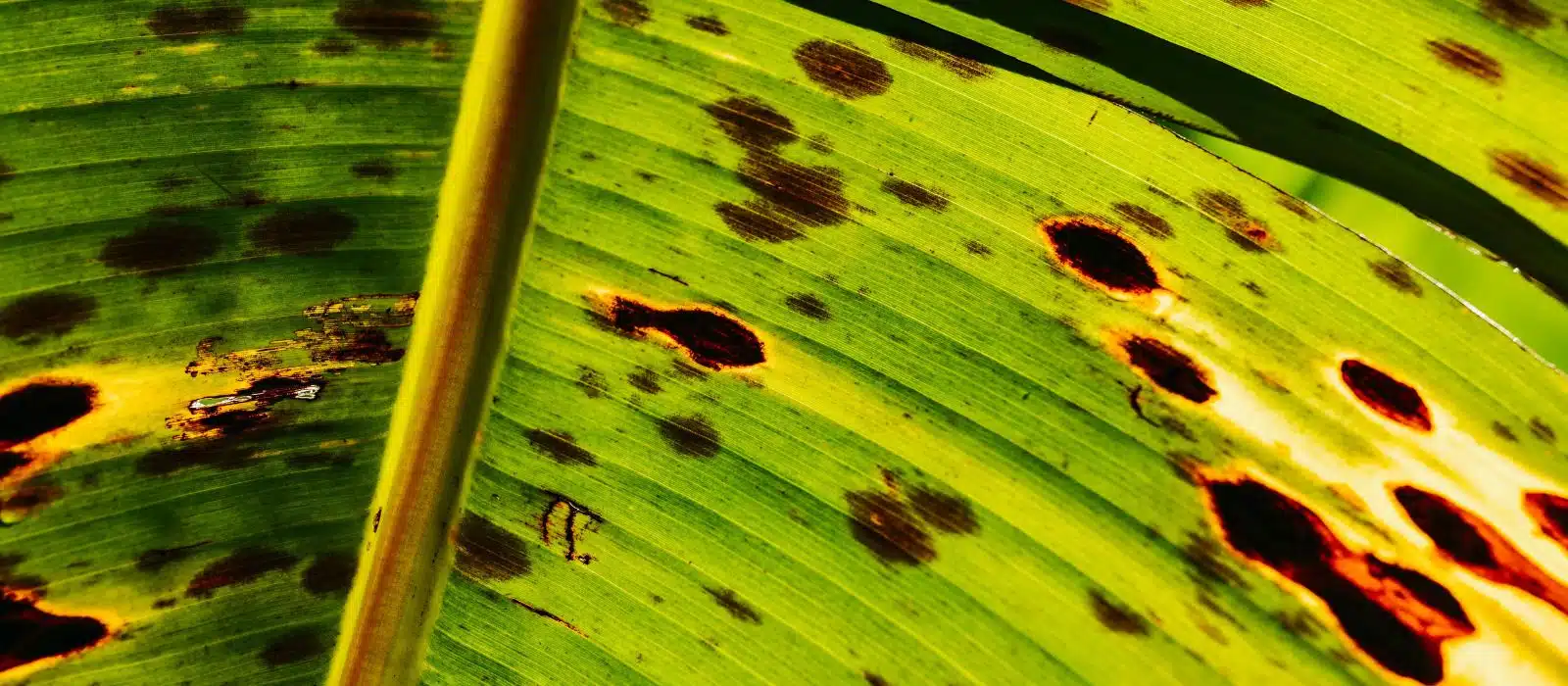
The classic sign is a leaf that has gone yellow or yellow-green between the veins while the veins themselves remain distinctly green — a pattern that tells you the problem is nutritional rather than a pest or disease. It typically appears first and worst on new growth at the branch tips, since that tissue needs the most iron to build chlorophyll, the green pigment that lets a leaf feed the tree.
Left unaddressed, chlorosis worsens over the seasons: leaves get smaller, scorch brown at the edges, branches die back from the tips, and the whole tree weakens and becomes vulnerable to other problems. Some species are especially prone here — silver and red maple, river birch, pin oak and others struggle in our soils — so catching it early matters. The sooner it is corrected, the less the tree weakens and the faster it greens back up once treated.
Why Alkaline Soils Cause It
Here is the counter-intuitive part: there is usually plenty of iron in Front Range soil. The trouble is pH. Our soils are strongly alkaline, and at a high pH iron converts to a form plant roots simply cannot absorb. So the tree starves for iron while standing in soil that contains it — a chemistry problem, not a supply problem. Adding more iron to the ground without addressing the pH simply does not help, because the soil locks the new iron up just as fast.
That is why throwing generic fertilizer at a chlorotic tree often does nothing. The fix has to either supply iron in a form the tree can use despite the pH, or work on the soil chemistry itself. Compacted, poorly drained clay makes it worse, which is why soil aeration and improving the root zone is often part of the long-term answer, not just an iron treatment on its own.
Treatment Options
For lasting results in our high-pH soils, we use chelated iron — specifically the EDDHA form, which stays available to roots where cheaper chelates fail in alkaline ground. It can be applied to the soil in the root zone, and for faster or longer-lasting correction on a valuable tree, iron can also be delivered by trunk injection straight into the vascular system, which can green a tree up within weeks.
Alongside the iron, we address the underlying soil over time, and pair treatment with deep root fertilization when broader nutrition is also lacking. Across Westminster and the metro, this combination greens trees back up and keeps them that way for the long haul, not just one season. We treat iron chlorosis throughout all 22 of the communities we serve.
Owner-Operated, ISA Certified, Insured
Shawn Brandau has greened up chlorotic Front Range trees since 1991 — an ISA Certified Arborist who treats the soil chemistry, not just the symptom, full insurance on every job.
Related Plant Health Care
Soil Aeration & Mulching
Relieve the compaction that makes chlorosis worse.
Soil aeration & mulching →Iron Chlorosis FAQs
High-pH, alkaline soil. There is usually plenty of iron in the ground, but at high pH it converts to a form roots cannot absorb, so the tree starves for iron despite standing in soil that contains it. It is a chemistry problem, not a supply problem.
Look for leaves that are yellow between the veins while the veins stay green, usually worst on new growth at the branch tips. In advanced cases leaves scorch brown and branches die back from the ends, and the whole tree gradually weakens.
Usually not. The problem is iron being locked up by soil pH, not a general nutrient shortage. The fix is chelated iron in a form that works in alkaline soil, plus longer-term soil management — not standard fertilizer, which leaves the underlying pH problem untouched.
In our high-pH soils, chelated iron in the EDDHA form works best, applied to the soil or by trunk injection for faster, longer-lasting results. We also address the underlying soil over time so the problem does not simply return, because iron alone treats the symptom rather than the cause, and the high pH would lock up new iron all over again. A durable fix has to work on the soil as much as on the leaves.
Silver and red maple, river birch and pin oak are among the most susceptible in Front Range soils. If you are planting new trees, choosing species suited to alkaline soil avoids the problem from the start, and we are glad to advise on tougher, better-adapted species that thrive in high-pH Front Range ground.
