
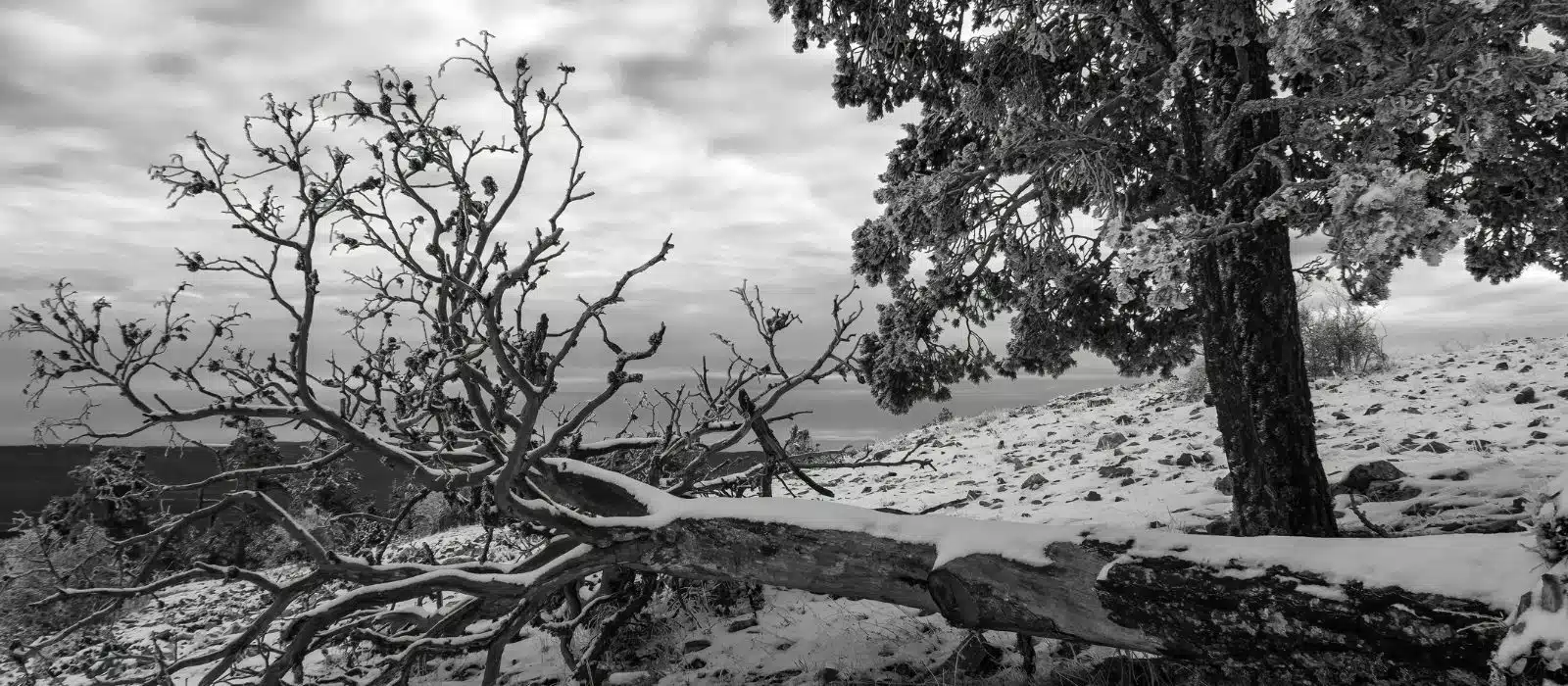
Snow, Wind & Hail Damage
Repair and recovery from Colorado’s heavy storm seasons.
Creative Tree & Stump LLC is a Brighton, CO-based tree removal company serving 22 communities across Adams, Weld, Jefferson, Boulder, Broomfield, and Denver counties. Shawn Brandau, an ISA Certified Arborist who has worked Colorado’s storm seasons since 1991, knows which damaged trees recover and which do not, and the company is fully insured. That judgment is the whole value of calling an arborist after a storm rather than the first crew with a chainsaw.
Why Wet Spring Snow Breaks Front Range Trees
Colorado’s most damaging tree weather is not the summer thunderstorm — it is the heavy, wet snow of March and April. Those late storms drop dense, water-laden snow onto trees that are already leafing out, and the combined weight on the foliage overloads limbs and unions that would easily handle dry winter snow. The result is the snapped branches and split trunks we see across the metro every spring, often on trees that looked perfectly healthy the day before.
Some trees fail far more readily than others. Fast-grown, brittle species — cottonwood, Siberian elm, willow and green ash — and trees with tight, V-shaped unions or unbalanced canopies are the first to break. High plains winds add to the load, and in Northglenn and the north metro the combination of wet snow and wind is a reliable yearly source of tree damage. The trees that survive these storms best are almost always the ones that were pruned and structurally sound going in.
Repair vs. Removal
Not every damaged tree needs to come down. If the trunk and major limbs are structurally sound and less than about half the canopy is lost, the tree can usually recover — we remove the broken and torn limbs with clean cuts that let the wounds close, rather than leaving ragged stubs that invite decay. Many trees that look ruined right after a storm are back in good shape within a season or two.
When the damage is structural — a split trunk, a failed main union, major bark loss, or more than half the crown gone — repair is a losing bet, and removal is the safer, more honest call. We will tell you which category your tree falls into instead of selling you repeated work on a tree that will not make it. Acting promptly also matters — torn limbs left ragged invite decay and insects, so clean cuts soon after the storm give the tree its best chance.
Preventive Cabling & Bracing
The best time to deal with storm damage is before it happens. For trees with weak, co-dominant stems or tight unions, cabling and bracing add structural support that helps them hold up under snow and wind load — a flexible cable high in the canopy reduces the strain on a vulnerable fork, and bracing rods reinforce a split or weak union before it fails. It is a routine way to keep an otherwise healthy, valuable tree standing through Colorado’s storm seasons.
Pruning helps too: thinning a dense canopy and removing deadwood before storm season lowers the snow and wind load a tree has to carry. We assess trees for these preventive measures across all 22 of the communities we serve, ideally in the calm months before the spring snows arrive.
Owner-Operated, ISA Certified, Insured
Shawn Brandau has read Front Range storm damage since 1991 — an ISA Certified Arborist who knows what recovers and what does not, full insurance on every job, and honest repair-or-remove advice.
Related Storm Services
Snow, Wind & Hail Damage FAQs
Late-season wet snow is dense and heavy, and it lands on trees that are already leafing out. The weight on the foliage overloads limbs and weak unions, snapping branches and splitting trunks that would shrug off dry winter snow.
Often, if the trunk and major limbs are sound and less than about half the canopy is lost. Clean removal of broken limbs lets wounds close and the tree recover. Structural damage like a split trunk usually means removal is safer.
Rarely on its own. Hail shreds leaves and can damage bark and young growth, which stresses a tree, but established trees usually recover. We watch hail-damaged trees for follow-on issues like dieback or pests over the next season, since the real harm often shows up months after the storm.
Thin dense canopies and remove deadwood before storm season to reduce load, and cable or brace weak, co-dominant unions for added support. Off-season pruning is the most cost-effective protection against snow and wind damage, and the calm fall and early-winter months are the ideal time to do it.
Fast-grown, brittle species like cottonwood, Siberian elm, willow and green ash, along with any tree that has tight V-shaped unions, an unbalanced canopy, or existing decay. Dead and declining trees are the most likely of all to come down, which is why removing them before storm season is money well spent.
