
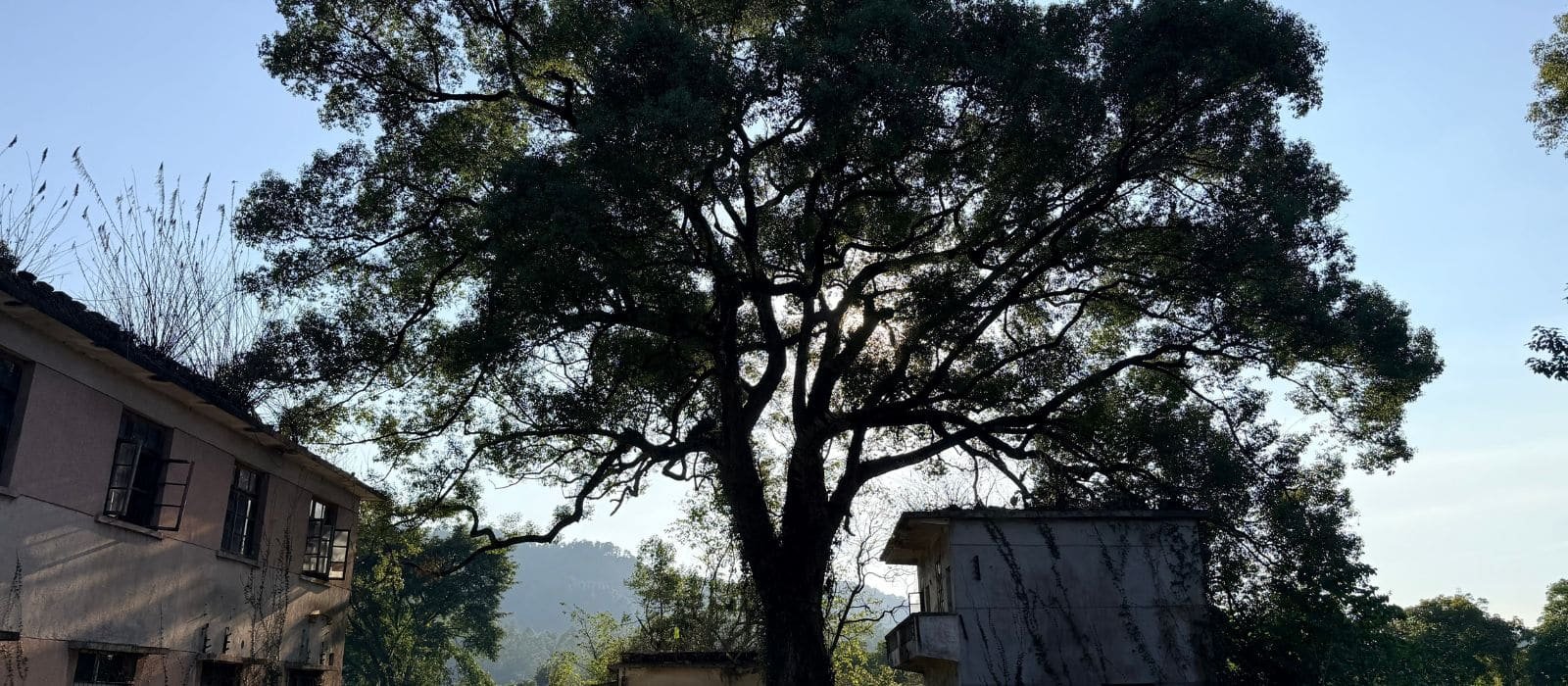
Large & Hazardous Tree Removal
Big, leaning or structurally compromised trees removed safely.
Creative Tree & Stump LLC is a Brighton, CO-based tree removal company serving 22 communities across Adams, Weld, Jefferson, Boulder, Broomfield, and Denver counties. Shawn Brandau, an ISA Certified Arborist, has taken down hundreds of large and high-risk trees across the region since 1991, and the company is fully insured for exactly this kind of high-stakes work. When a tree is large enough to damage a roof or injure a crew, the difference between a safe removal and a disaster is planning and experience, not horsepower.
What Makes a Tree Removal High-Risk?
Several factors push a removal from routine into hazardous: sheer size and weight, a lean toward a target, internal decay that weakens the trunk, dead or hanging limbs, and confined access that leaves no clean drop zone. A large Siberian elm or plains cottonwood in a mature Thornton backyard often checks several of these boxes at once.
The danger is not only to property. Uncontrolled wood can swing, barber-chair or kick back, which is why high-risk removals call for a planned dismantling sequence rather than a single cut. We assess decay, lean and targets before a saw ever touches the tree. Decay is often hidden: a trunk can look solid while a hollow or a column of rot inside has quietly cut its real strength in half, which is why a visual and sounding assessment comes first.
Crane & Rigging: Sectional Dismantling
For trees near structures we use sectional dismantling: a climber or bucket operator removes the tree in measured pieces, and each limb or log is lowered on rigging ropes under control instead of being dropped. Heavy sections are tied off, cut, and set down precisely where the ground crew wants them.
When a tree is too big, too dead, or too boxed-in to rig safely by rope, our in-house crane lifts each section straight up and out of the canopy. Owning the crane means we can choose the safest method on its merits, without the delay or markup of a rented machine and outside operator. Either way the goal is identical — never let an uncontrolled piece of wood decide where it lands.
Targets & Drop-Zone Planning
Before work starts we identify every target within reach of the tree — the house, garage, fence, deck, neighboring trees, sheds, vehicles and overhead lines — and plan drop zones and rigging points around them. On a tight lot the “drop zone” may be only a few feet wide, which is precisely when rigging or a crane earns its keep. We mark out that zone, stage equipment around it, and brief the crew before the first cut so everyone knows exactly where each piece is going.
Cost on large removals is driven mostly by this complexity: a 60-foot cottonwood over a roofline costs far more than the same tree in an open field, because every section has to be controlled. We give a clear, all-in estimate after assessing the site, and you serve as the final check on where wood comes down. We take on large and hazardous removals across all 22 of the communities we serve, from tight infill lots to rural acreage.
Owner-Operated, ISA Certified, Insured
Shawn Brandau has removed hundreds of large, high-risk trees across the Front Range since 1991 — an ISA Certified Arborist on site, full insurance on every project, and the same owner-led crew from quote to cleanup.
Related Tree Removal Services
Crane-Assisted
In-house crane for oversized trees and confined, high-target sites.
Crane-assisted removal →Large & Hazardous Tree Removal FAQs
We dismantle it in sections rather than felling it whole — rigging each piece down on ropes, or lifting it out with our crane. The method depends on the tree’s size, condition and how much clearance surrounds it. The more targets nearby, the more we lean on rigging or the crane to keep every piece under full control.
Not always, but a new or sudden lean — especially with soil heaving at the base — is a red flag. A long-standing, stable lean may be fine. We assess the root plate, trunk and targets before recommending removal. A tree that has leaned the same way for decades is very different from one that shifted overnight.
Size, weight, access and nearby targets all add complexity. A big tree over a roofline must be taken apart piece by piece under control, which takes more time, rigging and often a crane than a tree in an open yard.
Yes. Storm-damaged large trees are some of our most common emergency work, and we document the damage for insurance. For active emergencies, call (970) 580-6932 for same-day response.
Sometimes. If the structural problem is a single weak union or limb, cabling, bracing or a corrective prune may extend the tree’s life safely. We only recommend removal when the risk to people or property cannot be reduced any other way.
