
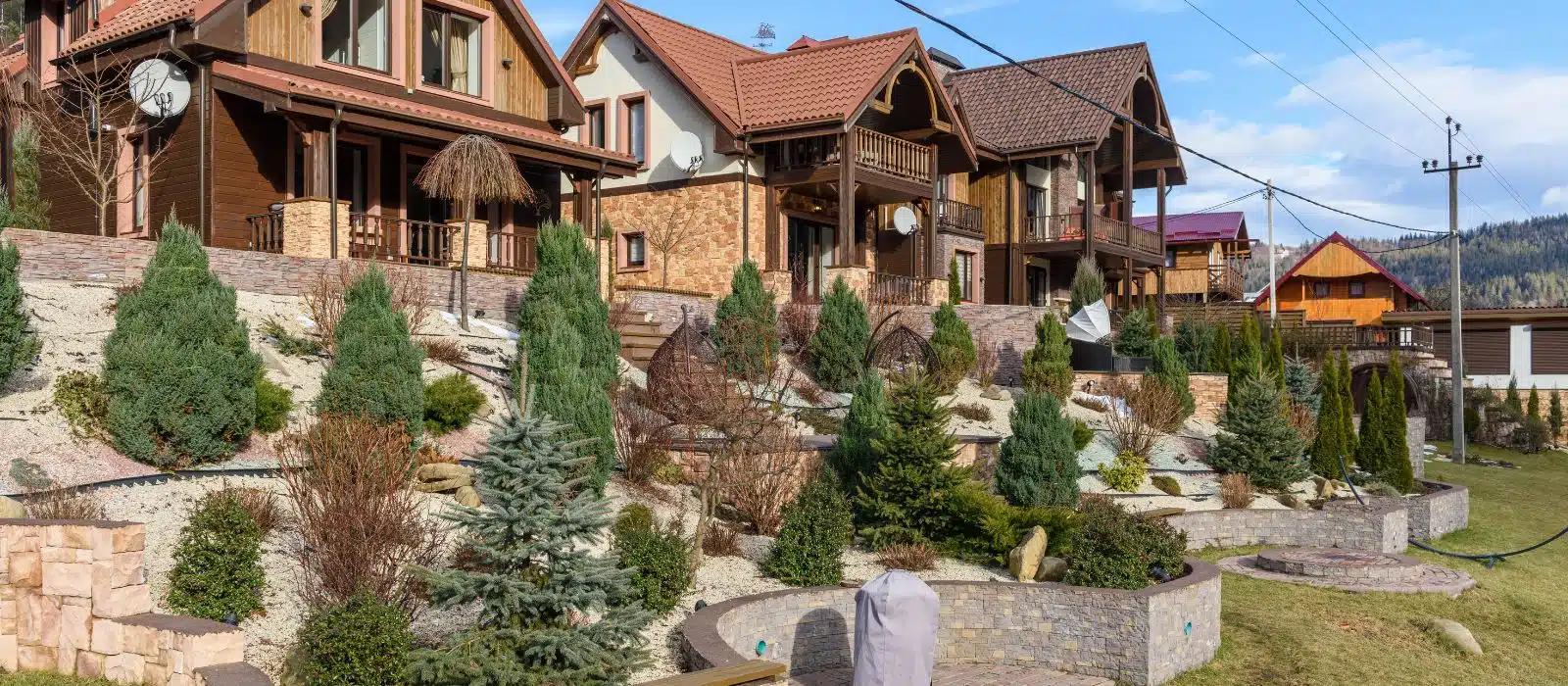
Firewise Landscaping
Fire-resistant planting and spacing around the home.
Creative Tree & Stump LLC is a Brighton, CO-based tree removal company serving 22 communities across Adams, Weld, Jefferson, Boulder, Broomfield, and Denver counties. Shawn Brandau, an ISA Certified Arborist who has worked Front Range properties since 1991, applies Firewise principles to real yards without turning them into gravel lots, and the company is fully insured. A fire-resistant yard can still be a beautiful one.
Principles of Firewise Design
The Firewise approach, promoted nationally by the NFPA, comes down to a few ideas: reduce the total amount of fuel near the home, break up what remains so fire cannot travel through it, choose plants that resist ignition, and keep it all maintained. The principle that ties them together is the home ignition zone — the idea that whether a house survives is decided mostly by the structure itself and the few feet to few hundred feet immediately around it, not by the distant fire front.
That means a Firewise yard is not a barren one. It is a thoughtfully arranged landscape where beds and plantings are separated by hardscape, lawn or gravel, where the most flammable material is kept well away from the house, and where dead leaves, needles and debris are not allowed to accumulate. The look can be lush; it is the arrangement and upkeep that make it fire-resistant. In communities like Louisville, which lost homes in the Marshall Fire, that ember-resistant design is no longer theoretical — it is a lesson paid for the hard way.
Plant Choices & Spacing
No plant is truly fireproof, but some are far safer than others. Fire-resistant choices tend to be high in moisture and low in oils, resins and waxes, and they hold little dead material — many well-watered deciduous shrubs, perennials and groundcovers fit the bill. The plants to keep away from the house are the resinous evergreens, especially junipers and ornamental conifers, which burn hot and fast and are a poor choice anywhere near siding or under eaves.
Spacing then does the rest of the job. Rather than continuous hedges and beds that let fire run, Firewise design groups plants into separated islands with non-flammable breaks between them, so an ignition in one spot does not carry across the yard. We help with both the selection and the layout, and the work pairs naturally with the broader thinning of defensible space across the property, so the planting and the fuels reduction reinforce each other.
The 0-to-5-Foot Zone
The single most important strip of any Firewise yard is the first five feet against the structure. This is the noncombustible zone, and the goal is to give wind-blown embers nothing to ignite where they most often land. That means no wood or bark mulch against the foundation, no shrubs or woody plants touching the siding, no firewood or stored combustibles on the deck — and instead gravel, stone, pavers or simply bare, irrigated soil. Embers landing there find nothing to ignite.
It is the cheapest, highest-impact change most homeowners can make, and it is exactly where we tell people to start. From there, the principles work outward into the rest of the yard and the defensible-space zones beyond. We provide Firewise landscaping guidance and work throughout all 22 of the communities we serve.
Owner-Operated, ISA Certified, Insured
Shawn Brandau has shaped Front Range landscapes since 1991 — an ISA Certified Arborist applying Firewise principles to real yards, full insurance on every job, and no gravel-lot overkill.
Related Wildfire Mitigation
Wildfire Mitigation
Our complete defensible-space and fuels-reduction overview.
All wildfire mitigation →Defensible Space Creation
Zone-based clearing that gives your home a fighting chance.
Defensible space →Firewise Landscaping FAQs
It is landscaping designed to resist fire — using fire-resistant plants, spacing vegetation into separated islands instead of continuous fuel, and keeping the area against the house noncombustible. It reduces what a wildfire has to burn as it reaches your property, lowering both the heat and the number of embers that find something to ignite near the house.
Plants high in moisture and low in oils, resins and waxes, with little dead material — many well-watered deciduous shrubs, perennials and groundcovers. Resinous evergreens like junipers are the opposite — they burn fiercely — and should be kept well away from the house.
No. A Firewise yard can be lush and attractive — it is the arrangement and upkeep that matter. We focus on spacing plantings into islands, moving the most flammable material away from the house, and keeping the immediate zone clean, not on stripping the yard bare.
Wood and bark mulch ignites easily from embers, and against the foundation it carries fire straight to the siding. In the first five feet we recommend gravel, stone or bare soil instead, keeping combustible mulch farther out in the yard where it is no longer a direct threat to the house.
Start with the first five feet against the house — the noncombustible zone — then work outward. Clearing combustibles from that strip and moving flammable plants and firewood away from the walls is the cheapest, highest-impact step you can take, and you can do much of it in a weekend.
