
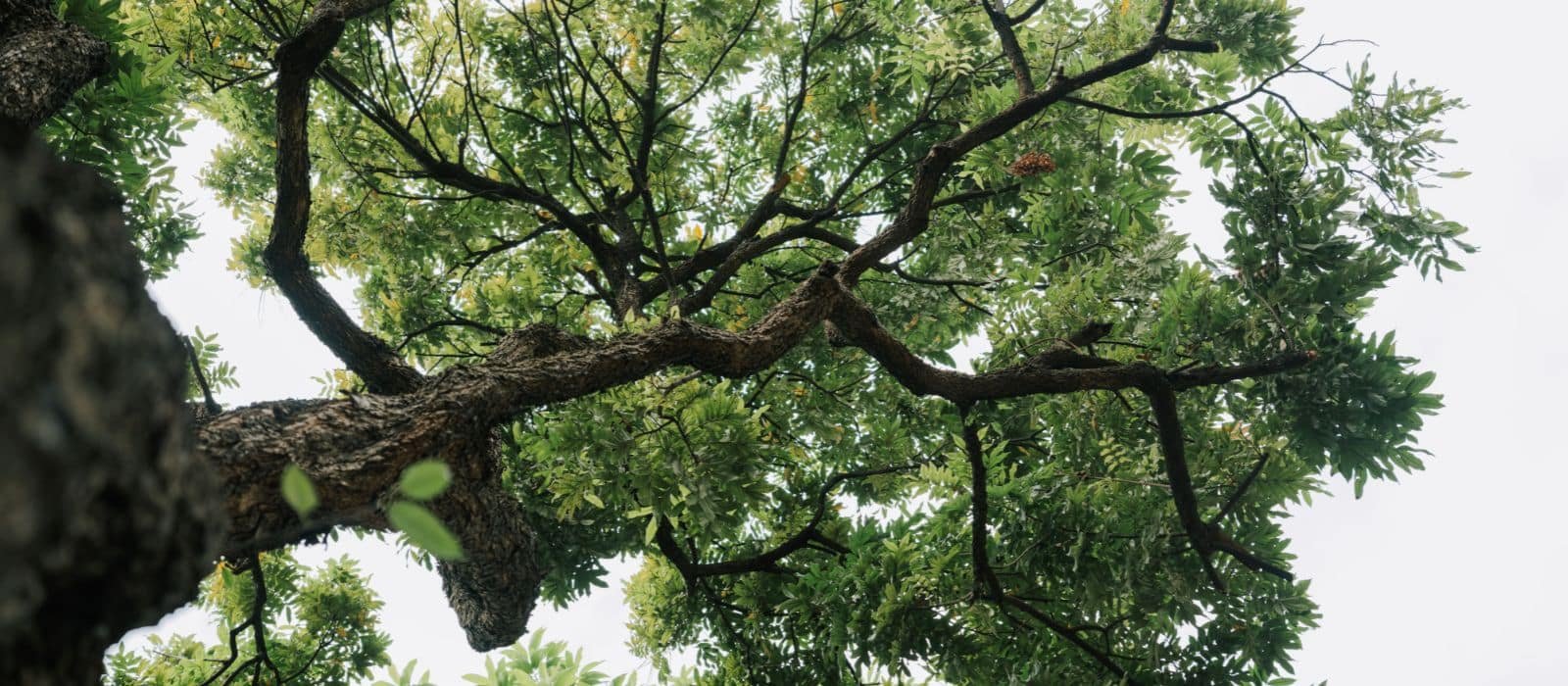
Crown Thinning
Selective branch removal for light, air and reduced wind load.
Creative Tree & Stump LLC is a Brighton, CO-based tree removal company serving 22 communities across Adams, Weld, Jefferson, Boulder, Broomfield, and Denver counties. Shawn Brandau — an ISA Certified Arborist — has thinned Front Range canopies since 1991, and the company is fully insured for work at height. Thinning is detail work — the value is entirely in which branches come out and how each cut is made, which is why an experienced eye matters more than a sharp saw.
What Is Crown Thinning?
Crown thinning removes a measured amount of live growth — mostly weak, crossing, rubbing and redundant branches — evenly throughout the canopy. The goal is a tree that keeps its natural size and silhouette but lets dappled light and air move through it. It is very different from topping, which hacks the canopy back to stubs, and from simply cutting the longest branches, which unbalances the tree.
Done well, thinning is barely noticeable from a distance; the tree just looks lighter and cleaner. The most common mistake is “lion-tailing” — stripping out all the interior growth and leaving foliage only at the branch tips. That actually increases the risk of failure, because it shifts weight to the ends of limbs and removes the inner growth that helps a branch taper and stay strong. We thin to keep weight distributed along the limb, not bunched at the ends.
Benefits: Light, Airflow and Wind Resistance
Thinning lets sunlight reach the lawn, garden beds and lower branches that a dense canopy shades out, and it improves airflow through the tree. Better air movement dries foliage faster after rain and snowmelt, which discourages the fungal leaf and needle diseases that thrive in still, damp canopies along the Front Range.
The bigger benefit here is wind. A dense crown acts like a sail; reducing that sail area lets gusts pass through instead of pushing the whole tree, which lowers the chance of limb failure or uprooting in a windstorm. In Thornton and other older neighborhoods full of large Siberian elms, maples and ash, a properly thinned canopy is meaningfully safer when the spring winds arrive.
How We Thin to Standard
We follow ANSI A300: no more than about a quarter of the live canopy comes out in a season, every cut is made just outside the branch collar, and growth is removed evenly rather than gutted from one area. We prioritize the branches that should go anyway — dead, broken, diseased, crossing and weakly attached — before touching healthy structure, so the tree loses the least useful growth possible.
Shawn assesses each tree first, because the right amount of thinning depends on species, age and condition; a young, vigorous tree tolerates more than a stressed mature one. We provide crown thinning across all 22 of the communities we serve, always with the owner on site to set the cuts.
You can expect a clean job. We bag or haul off all the trimmings, rake the area, and leave the lawn as we found it, and most residential thinning is a single visit of a few hours. Because the tree keeps its natural shape, there is no awkward recovery period the way there is after a bad cut — it simply looks lighter and healthier the same day, and we will walk the finished tree with you so you can see what came out and why.
Owner-Operated, ISA Certified, Insured
Shawn Brandau has thinned Front Range canopies since 1991 — an ISA Certified Arborist setting every cut, full insurance on every job, and a light hand that never lion-tails or tops a tree.
Related Pruning Services
Crown Thinning FAQs
Not when it’s done correctly. Removing up to about a quarter of the live canopy with proper cuts is well within what a healthy tree tolerates. Problems only arise from over-thinning or lion-tailing, which we specifically avoid.
Lion-tailing strips the interior branches and leaves foliage only at the limb tips. It looks tidy but shifts weight outward, weakens limb taper, and actually raises the risk of failure — so it is considered an improper practice.
It helps. A thinned crown lets wind pass through instead of catching it like a sail, which lowers the load on limbs and roots in a gale. It is one of the better preventive steps for large Front Range shade trees.
Typically every three to five years for an established shade tree, though vigorous species may regrow faster. We assess each tree and recommend an interval rather than thinning on a fixed schedule regardless of need. Over-thinning on a calendar, whether the tree needs it or not, does more harm than good.
No — they are opposites in spirit. Thinning lightens the canopy while keeping the tree’s natural form and structure; topping removes the top and large limbs back to stubs and harms the tree. We thin and reduce properly, and we never top. If you have been quoted a “thinning” that is really a heavy cutback, it is worth a second opinion before the cuts are made.
